


This guide helps you sort fact from fad. Many diets promote strict rules and fear around certain items. Those ideas can feel simple, but they lack clear scientific definition and can be hard for people to keep.
By contrast, modern microbiome research focuses on variety and how your microbes shape digestion and overall function. You’ll learn why diverse plants and fermented foods tend to support beneficial bacteria, while ultra-processed items often raise risks for obesity and type 2 diabetes.
Processing can be useful—think of safe canning or yogurt that boosts nutrient access. Consumer kits claim quick answers, but clinical tests still guide care when needed. This section previews how your food choices affect your body and sets up practical steps you can try.
Key Takeaways
- “Clean” is a vague cultural label without consistent scientific backing.
- Focus on variety and plant diversity to nourish your microbiome.
- Fermented and some processed foods can be beneficial.
- Ultra-processed items link to higher disease risk.
- Clinical tests still outpace consumer kits for diagnosis.
What you really mean by “clean eating” versus “gut health”
When people say they want to eat “clean,” they often mean cutting items out. That approach centers on exclusion rather than on adding what helps you feel better.
Clean eating: restriction without a scientific definition
“Clean” rarely has a clear scientific meaning. Many plans ban processed foods or whole groups like grains, dairy, or sugar even when no evidence shows benefit for most people.
Strict rules can raise anxiety and risk nutrient shortfalls. That can harm both your body and your mental health. In some cases, restriction leads to disordered patterns such as orthorexia.
Gut health: supporting digestion, nutrients, and your microbiome
Gut health focuses on what you add: variety, fiber-rich plants, and fermented items that feed beneficial microbes. This view helps digestion and nutrient absorption while reducing guilt and rigidity.
| Focus | Typical approach | Practical examples |
|---|---|---|
| Exclusion | Ban groups with little scientific support | Cutting grains or dairy entirely |
| Addition | Increase variety to feed microbes | More colorful plants, yogurt, sauerkraut |
| Processing view | All processing is labeled bad | Distinguish cooking/fermenting from ultra-processed |
Feeling foggy, stuck, or emotionally off?
- • Trouble focusing or feeling scattered
- • Low energy or emotional drive
- • Feeling disconnected or stuck
These tools can help you reset, refocus, and reconnect:
- 🔋 Mitolyn
- Cellular energy & mitochondrial support
- 🌙 SleepLean
- Restful sleep & metabolic balance
- 💧 ProstaVive
- Prostate comfort & urinary support
Ask, “How does this food support my gut and nutrients?” That simple switch leads to balanced choices that limit ultra-processed items most of the time while supporting whole-body health.
Gut Health vs Clean Eating: What’s the Difference?
Fixating on purity can push you toward anxiety and poor long-term choices. Restrictive patterns often become rigid rules that increase stress and harm mental health. Over time, this can cause nutrient shortfalls and disordered eating.
Why restriction can backfire on your body and mind
Orthorexia nervosa—an unhealthy focus on “pure” foods—shows how good intentions can turn harmful. People can lose flexibility, leading to rebound eating or burnout.
“Rigid food rules raise stress and often reduce diet quality over time.”
Healthy eating focuses on abundance, variety, and sustainability
Sustainable patterns win. A varied diet with colorful plants, beans, nuts, seeds, and fermented items feeds many microbes and supports your body.
You can add simple swaps: toss beans into a salad, mix seeds into yogurt, or top bowls with kimchi. These moves boost diversity and may lower inflammation.
| Problem | Restriction Result | Abundance Alternative |
|---|---|---|
| Rigid rules | Stress, nutrient gaps | Flexible patterns, varied plants |
| Fear of certain foods | Social strain, rebound eating | Occasional treats, limit ultra-processed items |
| Low microbial diversity | Higher inflammation risk | More fermented foods and fiber |
Processed foods explained: processed vs. ultra-processed
C. Not every processed item harms your body; the method and ingredients matter most.
The USDA treats processing as any change from a raw state—cooking, canning, freezing, drying, or fermenting. Many of those steps make food safer and can boost nutrient availability.
Helpful processing includes freezing produce at peak ripeness, pressure canning beans, sourdough fermentation, and live yogurt production. These can add shelf life, flavor, and live cultures that support your gut and microbiome.
Ultra-processed items to limit
Ultra-processed foods are energy-dense and often full of added sugars, fats, salt, emulsifiers, and flavorings. They typically lack fiber and beneficial compounds.
Higher intake links in recent research to obesity, type 2 diabetes, and poorer gut outcomes. Choose minimal-additive options most of the time.
Practical examples and swaps
Good examples: olive oil, whole-grain sourdough, live yogurt, and sauerkraut fit a balanced pattern.
Try plain yogurt instead of sweetened desserts. Pick whole-grain sourdough instead of highly processed white loaves. Read labels for fiber and short ingredient lists.
| Processing type | Benefit | Example |
|---|---|---|
| Freezing | Locks nutrients at peak ripeness | Frozen berries |
| Fermenting | Adds live cultures and flavor | Sauerkraut, sourdough |
| Canning/jarring | Extends shelf life, improves safety | Canned tomatoes, beans |
| Ultra-processed | High additives, low fiber, energy-dense | Snack cakes, many ready meals |
“Focus on degree and purpose: processing can help when it boosts nutrients and fiber; limit products made mainly to satisfy cravings.”
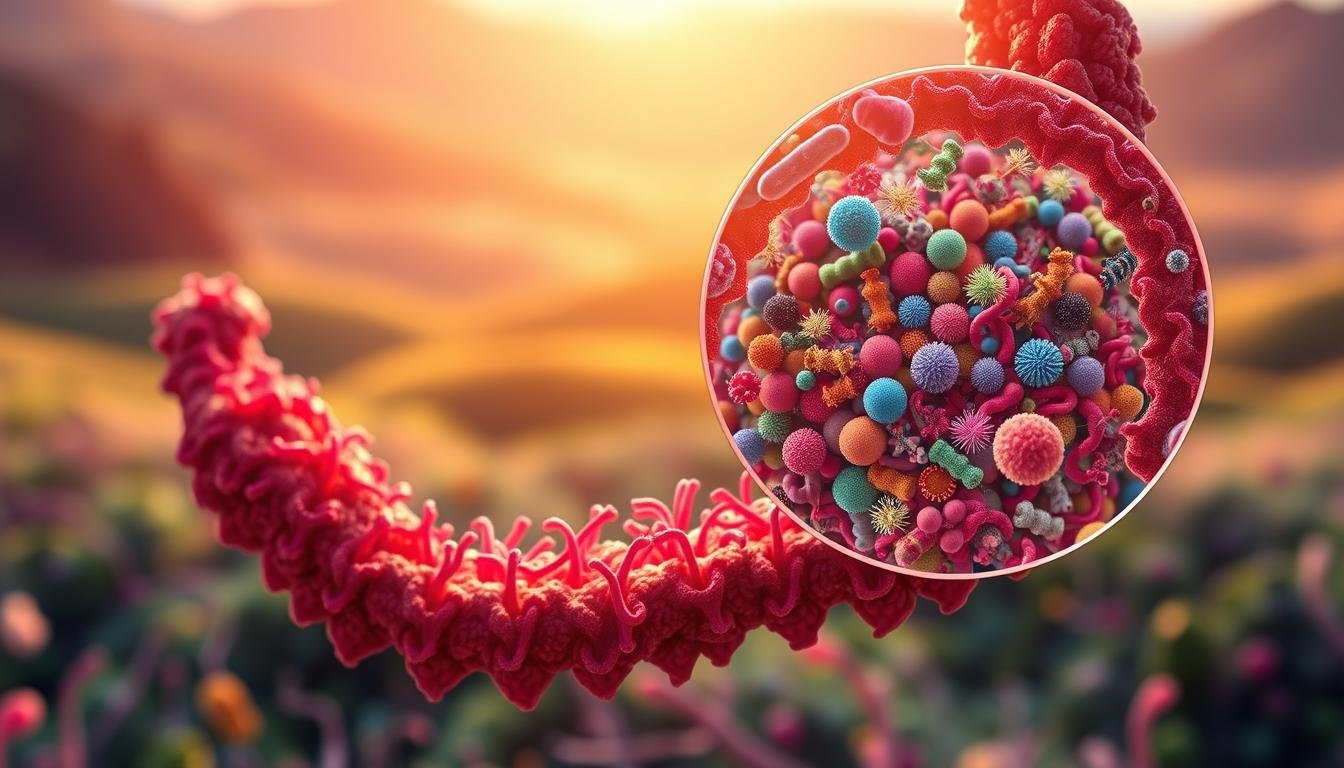
Meet your gut microbiome: trillions of microbes that shape health
Inside your intestines, trillions of tiny organisms work together and influence digestion, immunity, and overall health.
Diversity and balance: why fiber-rich plant foods matter
Different fibers feed different microbes. A varied lineup of plants helps keep your microbiome resilient.
Include a mix of fruits, vegetables, legumes, nuts, herbs, and spices across the week. Each type of fiber supports distinct microbes and boosts diversity.
Short-chain fatty acids and pH: how good bacteria protect you
When microbes ferment fiber they make short-chain fatty acids—beneficial compounds that lower intestinal pH. A lower pH favors good bacteria and limits opportunists.
Diets high in sugar and saturated fat shift the microbial neighborhood toward less-helpful species. Fermented foods can nudge your microbiome toward more beneficial microbes and lower inflammation.
- Small, steady steps: add one new plant each week.
- Swap: plain yogurt or kimchi for a sweet snack.
- Mix: beans into salads and seeds on oats.
“Short-chain fatty acids help support the gut barrier and immune function.”
When the balance tips: dysbiosis, SIBO, and inflammation
Microbial balance matters because shifts can change how you digest, absorb, and feel. Dysbiosis often means fewer protective species, more opportunistic bacteria, and lower overall diversity. This pattern raises inflammation and can worsen symptoms over time.
What dysbiosis looks like
Signs include reduced beneficial microbes, overgrowth of less-desirable bacteria, and a drop in diversity in your microbiome. Diets high in sugar and saturated fat, long-term chemical exposures, or certain medications can push that shift.
Small intestinal overgrowth and motility
Movement through your system controls where bacteria live. Slow transit lets microbes expand in the small intestine and can cause SIBO. Typical complaints are gas, bloating, and discomfort.
IBD and microbiome shifts
Inflammatory bowel disease, including ulcerative colitis and Crohn’s disease, is linked with persistent dysbiosis. Cause and effect are intertwined, so clinicians often test for colitis or Crohn’s when inflammation markers or symptoms point that way.
“Not every symptom means microbial imbalance; careful evaluation helps you find the right treatment.”
- Restore diversity: fiber-rich plants and targeted therapies help rebalance bacteria.
- Address motility: movement, hydration, and medical review reduce SIBO risk.
- Know when to seek care: persistent inflammation or red flags needs clinical evaluation.
| Issue | Typical signs | Common actions |
|---|---|---|
| Dysbiosis | Low diversity, uncomfortable symptoms | Diet, reduce exposures, medical review |
| SIBO | Gas, bloating, slow transit | Motility support, breath testing, antibiotics/probiotics |
| IBD | Persistent inflammation, bleeding, weight loss | Clinical testing, targeted therapy, nutrition plan |
Symptoms and red flags to watch for in your gut
Early warning signs often start with common complaints: bloating, loose stools, and intermittent abdominal pain.
This triad—bloating, non-bloody diarrhea, and abdominal pain—often prompts a closer look at your microbiome and diet patterns.
Bloating, diarrhea without blood, abdominal pain: common patterns
Many people notice a pattern before they seek care. You may see swings in stool form or frequency while feeling more bloated than usual.
Note: diarrhea without blood can still be linked to poor gut health or irritable bowel syndrome and often calls for tracking and simple changes first.
Changes in bowel habits and when to call your doctor
Normal bowel frequency ranges from three times a day to once every three days. A clear change from your usual pattern matters.
- Red flags: visible blood in stool, unexplained weight loss, fever, or persistent change in bowel habits.
- Clinicians may test stool for markers like fecal calprotectin to check for inflammation.
- Serious causes to rule out include colon cancer, ulcerative colitis, or Crohn’s disease.
“Not every symptom means a serious disease, but timely evaluation keeps you safe.”
Track timing, food triggers, and responses to self-care. This helps your clinician distinguish irritable bowel syndrome from inflammatory conditions.
If you see red flags or worsening symptoms, call your clinician promptly. Early review clarifies whether tests or treatment are needed and helps protect long-term health.
Testing realities: what helps, what doesn’t
Before you spend on a home kit, know which tests actually guide care and which mostly satisfy curiosity. Consumer panels report who’s present in your microbiome, but they rarely change a clinical plan.
Consumer microbiome tests versus clinical value today
Direct-to-consumer kits map bacterial types and diversity. They can be interesting, but results lack standardized interpretation and actionable steps for most people.
Clinicians usually do not order broad microbiome panels. Repeating them often adds cost without changing treatment.
Stool, blood, and breath tests your clinician may use
Providers focus on targeted diagnostics tied to your symptoms. Common tools include stool tests for infections or fecal calprotectin to flag inflammation.
- Stool testing: checks pathogens and inflammation markers that suggest IBD or other diseases.
- Blood tests: assess systemic signs and rule out causes that need different care.
- Breath testing: helps diagnose small intestine bacterial overgrowth (SIBO) by measuring gas produced by bacteria.
Key point: there is no single clinical “dysbiosis test.” Good care pairs symptom tracking with targeted testing and proven treatments. If risk factors exist, your provider may also discuss screening for colon cancer.
“Targeted tests guide treatment; broad panels mainly fuel curiosity.”
Build a healthy gut diet without the “clean” rules
Build a practical plate that supports digestion and variety, not strict rules. You’ll focus on adding colorful plants, useful fermented items, and habits that keep your system moving. This approach emphasizes sustainability and real foods you enjoy.
Diversify your plants: eat the rainbow for polyphenols and fiber
Aim for wide variety. Try to get 30+ different plant types across a week: fruits, vegetables, beans, nuts, seeds, herbs, and spices. Color signals diverse polyphenols and fiber that feed a resilient microbiome.
Embrace fermented foods
Include yogurt, kefir, kimchi, kombucha, tempeh, or miso several times per week. These foods supply probiotics and can help lower inflammation while adding flavor and texture to meals.
Limit ultra-processed items most of the time
Choose higher-fiber, minimally processed choices. Swap snack cakes and sugary drinks for whole-grain sourdough, plain yogurt with berries, or fruit-forward desserts to boost nutrients and lower added sugars and salt.
Hydrate, move, and aim for regular motility
Drink water and herbal tea instead of sweet sodas. Regular activity and steady hydration help transit and reduce risk of small intestine overgrowth. Consistency matters more than perfection.

| Action | Why it helps | Practical example |
|---|---|---|
| Plant diversity | Feeds many microbial types and adds fiber | Grain bowls with beans, roasted vegetables, seeds |
| Fermented foods | Supplies probiotics and may lower inflammation | Yogurt with berries, kimchi on sandwiches |
| Limit ultra-processed | Reduces added sugars and low-fiber items | Swap chips for nuts, soda for water or tea |
| Hydration & movement | Supports motility and even microbial distribution | Daily walks, regular water intake |
“Small, steady changes beat rigid rules — consistency builds lasting benefit.”
Smart tweaks: fiber, probiotics, and personal tolerances
Small, focused tweaks can deliver big wins for digestion and comfort.
Use targeted steps rather than wide rules. Start with how fiber works and then layer in microbes and personal testing.
Fiber for both diarrhea and constipation: how it works
Soluble fiber is hydrophilic — it soaks up water and can firm loose stools. At the same time, overall fiber adds bulk and softens hard stools, easing constipation.
Try gentle sources first: oats, psyllium, beans, and cooked vegetables. Increase slowly and drink water to help motility and limit small intestine overgrowth.
Try probiotics and prebiotics strategically
Clinicians often trial probiotics for bloating, diarrhea, and pain after ruling out serious causes. Favor well-studied strains: Lactobacillus, Bifidobacterium, and Saccharomyces.
Combine prebiotics to feed good bacteria or use a synbiotic. Give a trial at a consistent dose for several weeks and track symptoms.
Gluten, lactose, and specific triggers: listen to your body
Test for celiac disease if reactions to gluten are strong. Many people manage lactose intolerance by avoiding dairy or using lactase.
Keep a simple log of foods, doses, and timing. Personalization matters — what helps one person may not help another.
| Action | Why it helps | Quick example |
|---|---|---|
| Adjust soluble fiber | Firms loose stools; softens hard stools | Start psyllium 1 tsp/day with water |
| Try probiotics | May ease bloating and diarrhea | Lactobacillus or Bifidobacterium daily for 4 weeks |
| Add prebiotics/synbiotics | Feeds good bacteria and boosts effects | Inulin-rich foods or combined supplement |
| Test triggers | Confirms celiac or lactose intolerance | Blood/biopsy for celiac; lactose breath test |
“Stack small wins: one fiber change, one probiotic trial, and tracking will guide what truly helps you.”
Conclusion
This guide gives you clear, practical steps to support your gut microbiome with variety, fiber, and fermented foods while avoiding rigid exclusion. Build plates rich in fruits, vegetables, legumes, whole grains, nuts, seeds, herbs, and spices to feed good bacteria and supply nutrients.
Limit ultra-processed foods most of the time, watch for bloating, non-bloody diarrhea, or abdominal pain, and seek care if you see blood, weight loss, or worsening symptoms. Consumer microbiome kits offer limited clinical value; targeted stool, blood, or breath tests guide diagnosis when infection, SIBO, irritable bowel syndrome, inflammatory bowel disease, or cancer risk is suspected.
Use fiber and trial probiotics thoughtfully, personalize changes, and favor steady habits over strict rules. Small steps over time protect your body, reduce inflammation risk, and support lasting digestive comfort.
FAQ
How do you distinguish clean eating from supporting your microbiome?
Can strict restriction harm your digestion or mindset?
Which types of processing are actually beneficial?
What should you limit to protect microbial balance?
Why does eating a variety of plants matter?
How do short-chain fatty acids help keep the gut environment healthy?
What is dysbiosis and how might you notice it?
When is SIBO a concern and what causes it?
How do inflammatory bowel diseases relate to microbial shifts?
Which symptoms warrant medical evaluation?
Are consumer microbiome tests useful for guiding diet?
What tests might your clinician use for digestive complaints?
How do you build a balanced plan without strict “clean” rules?
How can fiber help with both constipation and diarrhea?
Should you try probiotics or prebiotics?
What if you suspect food triggers like gluten or lactose?
How do lifestyle factors support a resilient microbiome?
Affiliate Disclosure: Some of the links in this post are affiliate links. This means I may receive a small commission if you purchase through my links, helping me keep this site running — at no additional cost to you.