
You need clear guidance when you decide how to cook outdoors. This brief intro shows how two popular methods use very different heat patterns and time frames to shape flavor and texture.
High, direct heat from gas burners or hot coals sits just under a grate and pushes quick cooks on tender cuts. Temperatures at the grate often run 500–700°F, while flames can spike much higher.
By contrast, low, indirect heat circulates with the lid closed. That method keeps temperature in the 200–300°F range and lets tough meat become tender over hours.
Instant-read thermometers help with fast checks on a hot grill. For long, low cooks you rely on leave-in probe alarms so you track both meat and pit temps without guesswork.
Read on to choose the right approach for your food, schedule, and desired results with less stress and better outcomes.
Key Takeaways
- Direct, high heat is best for quick cooks on tender cuts.
- Low, indirect heat at 200–300°F suits long, slow cooks for tough meat.
- Use instant-read tools for quick checks and leave-in probes for long sessions.
- Lid position and airflow change temperature control and final texture.
- Plan your time based on method to hit desired tenderness and flavor.
Quick definitions so you know what you’re cooking
Knowing how heat moves lets you pick a method that fits your menu and schedule. Below are short, practical definitions to help you choose the right tool and timing for your food.
Grilling: hot and fast over direct heat
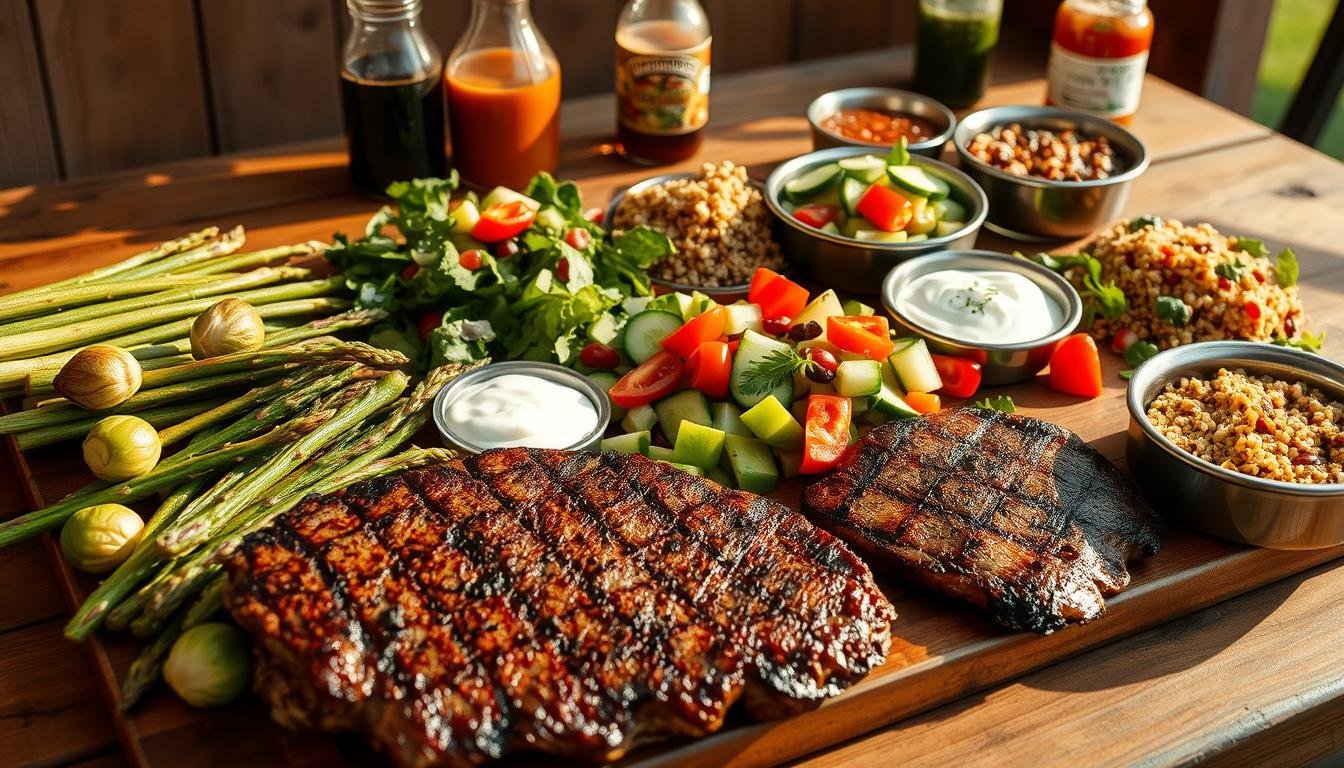
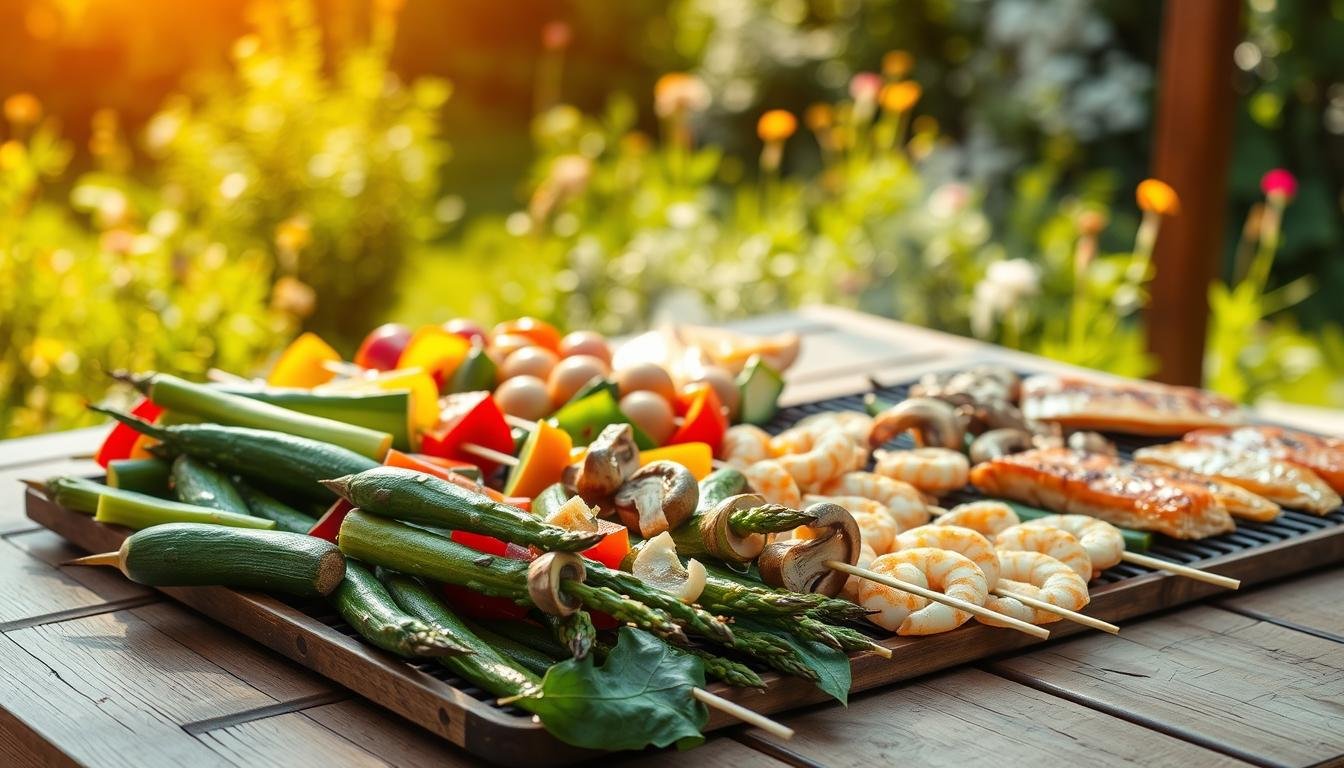
Grilling places food directly over the heat source for quick sears and char. Typical cooks run from about 3–20 minutes at high temperatures, often near 500°F or higher.
This method suits tender meat and veggies—think steaks and chicken breasts—and works on gas or charcoal when you want a fast, flavor-packed finish.
Barbecuing: low and slow over indirect heat
Barbecuing moves food away from direct flame and uses indirect heat around 225–275°F. Close the lid so convection keeps a steady temperature.
Feeling foggy, stuck, or emotionally off?
- • Trouble focusing or feeling scattered
- • Low energy or emotional drive
- • Feeling disconnected or stuck
These tools can help you reset, refocus, and reconnect:
- 🔋 Mitolyn
- Cellular energy & mitochondrial support
- 🌙 SleepLean
- Restful sleep & metabolic balance
- 💧 ProstaVive
- Prostate comfort & urinary support
This setup turns tough cuts tender over longer time and is ideal when you can monitor with a leave-in probe.
Smoking: adding wood smoke flavor across a range of temperatures
Smoking layers wood aroma onto grilling or barbecue. Use wood chunks on charcoal or a foil pouch on gas. Cold smoking with a pellet tube adds aroma without cooking.
- Tip: Set a two-zone layout on your grill to switch between direct sear and indirect finish.
- Make smoke on a gas unit with chips; on charcoal, add long-burning wood chunks.
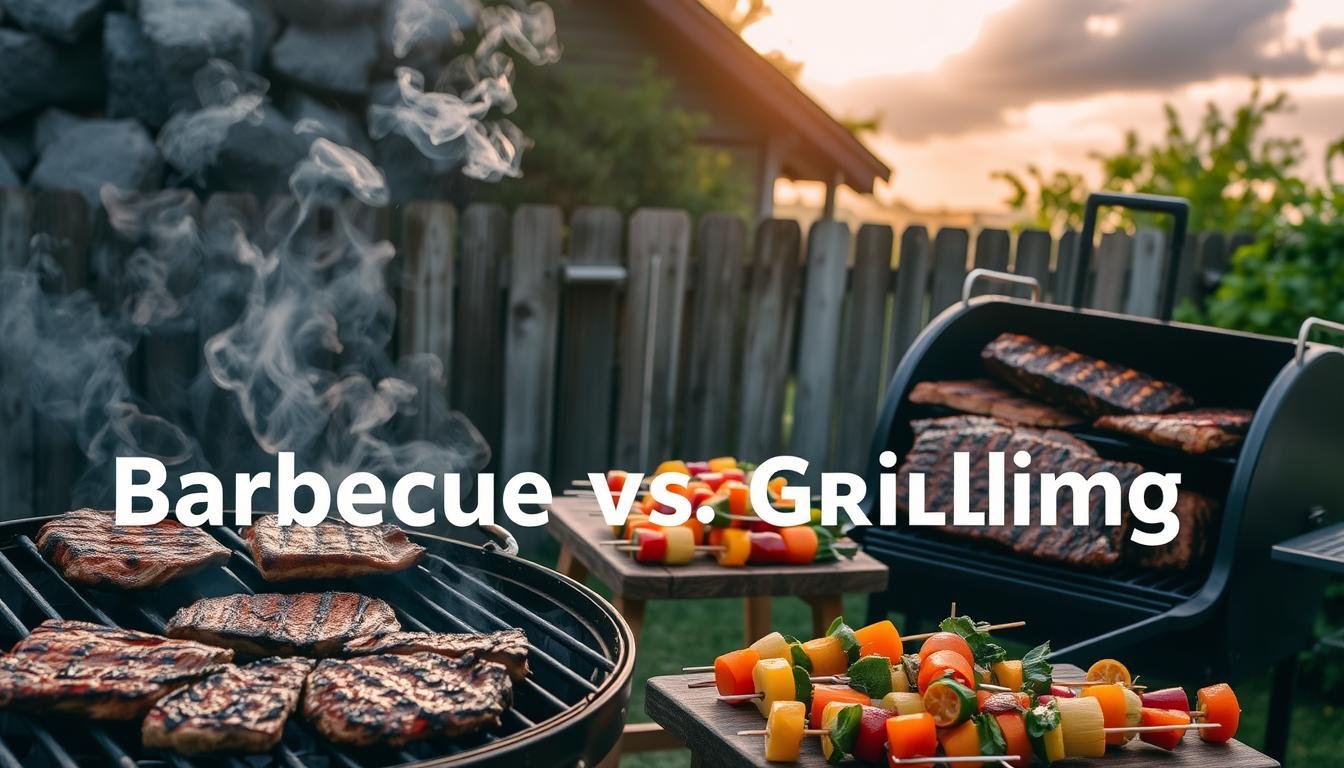
Barbecue vs Grilling: What’s the Real Difference?
Direct flame and hot grates blast intense energy into food for fast sears and visible char. That rapid transfer comes from radiation and conduction. It uses a concentrated heat source right under your meat and finishes ribs or steaks in just a few minutes.
Heat transfer and sources
Grilling relies on direct heat from flames and a hot grate. Barbecuing uses indirect heat and convection in a closed cooker. You can bank coals to the side or close burners under food to create that indirect zone.
Temperatures and times
Think 500–700°F at the grate for grilling versus 200–300°F ambient for bbq. Grills run minutes; barbecue needs hours so collagen in brisket and pork shoulder melts into gelatin.
Smoke and flavor
Grilling gives quick flare-ups and punchy aroma. Barbecue layers sustained hardwood smoke from wood chunks for deeper seasoning during long cooking.
| Factor | Grilling | Barbecue |
|---|---|---|
| Heat transfer | Radiation & conduction | Convection (indirect heat) |
| Temperature range | 500–700°F at grate | 200–300°F ambient (hot-and-fast up to 325°F) |
| Typical time | 5–20 minutes | 2–18 hours |
| Smoke style | Brief flare-ups | Sustained hardwood smoking |
Gear and fuel: how your grill, smoker, and fuel choice change the cook
Your choice of grill and fuel shapes how heat reaches food and how quickly flavors develop. Pick gear that matches your plan: fast searing, steady long cooks, or a mix of both.
Gas grills and quick zone control
With gas you flip burners on or off to make direct heat or an indirect zone in seconds. That makes it easy to switch between searing and lower-temperature finishing.
Charcoal, live coals, and vent work
Bank live coals to one side for two-zone control. Use bottom and top vents to manage heat and keep flare-ups in check while you tend meat.
Pellet, ceramic cookers, and diffuser plates
Pellet grills rely on a diffuser plate for steady indirect heat, perfect for set-and-forget smoking. Ceramic kamados add a ceramic plate to convert from direct to indirect and hold steady temperatures for long cooks.
Wood selection and smoke character
Wood chunks shape flavor: hickory or oak for a firm backbone, apple for sweetness, mesquite for bold intensity. Choose your wood to match your cooking method and the meat you plan to serve.
- Gas = instant changes; great for weeknight grilling and two-zone searing.
- Charcoal = hands-on control; bank coals and adjust vents for flare-up management.
- Pellet & kamado = steady indirect heat; add sear features if you need direct flames.
| Gear | Primary heat style | Best use |
|---|---|---|
| Gas grill | Direct heat / two-zone indirect | Fast sears and quick switches between sear and indirect finishing |
| Charcoal grill | Direct or indirect via coals to one side | Versatile control for smoky flavor and flare-up searing |
| Pellet grill | Steady indirect (diffuser plate) | Set-and-forget smoking with occasional sear stations |
| Kamado / ceramic | Indirect with ceramic diffuser | Stable low-and-slow cooks and hot-and-fast searing with insert |
Techniques and temperatures you’ll actually use today
Pick a temperature plan now so your next outdoor cook hits the mark without guesswork.
Classic low-and-slow runs about 225–275°F with the lid closed. Use indirect heat and patience so tough cuts turn tender over hours without drying out. Add a few wood chunks for gentle smoke and keep a leave-in probe watching internal progress.
Hot-and-fast for shorter long cooks
Run 275–325°F when you want to shorten time but still use indirect heat through a drum or diffuser. This method keeps juices and helps crisp surfaces for competition-style cooks.
Two-zone sear-then-finish
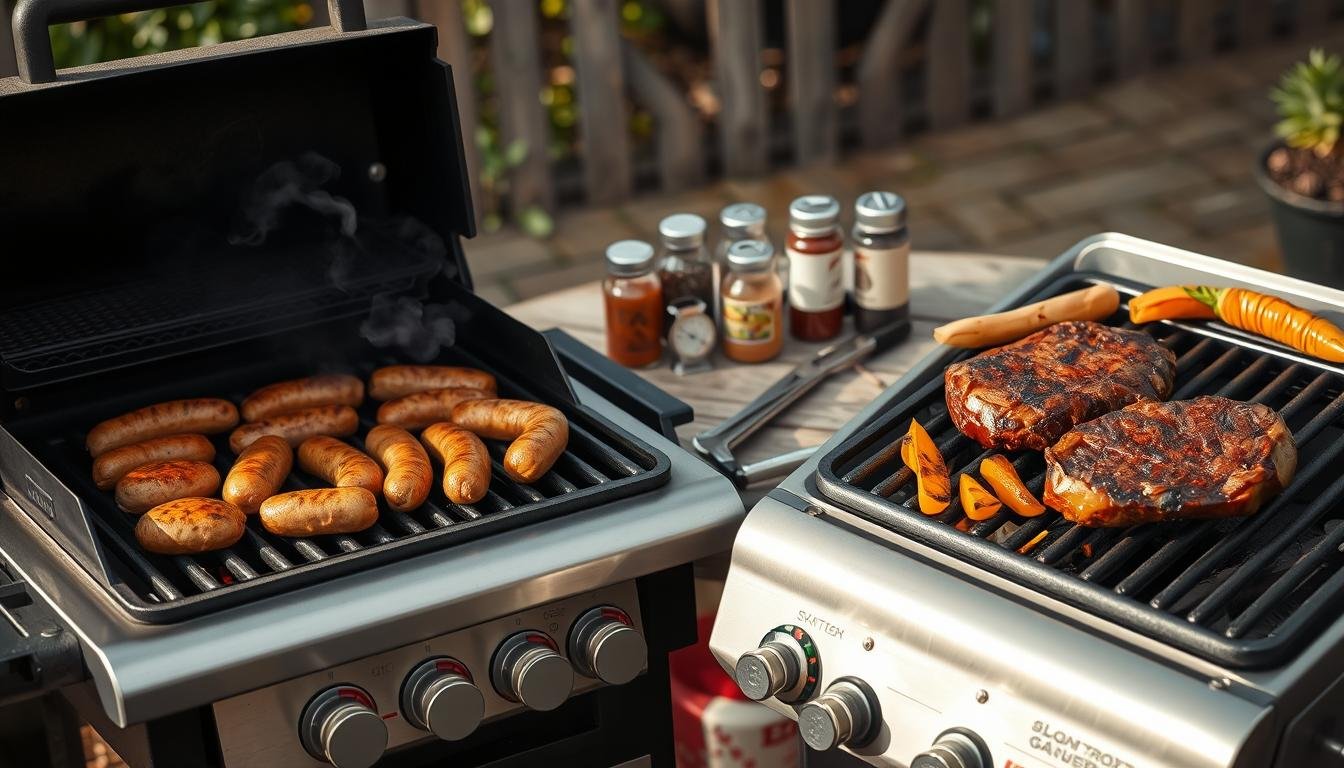
Set a hot direct area for quick sears, then move food to the cool side to finish. This avoids burning sugary sauces and nails the interior without overcooking.
“Use an instant-read for quick checks on the hot side and a leave-in probe for long cooks to manage both meat and pit temperature.”
- Set charcoal or burners so your indirect zone holds steady in your target range.
- Add wood sparingly for smoke; too much can overwhelm delicate meat.
- Watch color, bark, and probe tenderness more than clock times for pull-ready pork shoulder.
| Technique | Temperature range | Best use |
|---|---|---|
| Low-and-slow | 225–275°F | Tough cuts, long slow cooking, sustained smoke |
| Hot-and-fast | 275–325°F | Shorter long cooks, crisp skin, competition-style timing |
| Two-zone grilling | High sear + cooler finish | Sear then finish without burning; quick items and mixed cooks |
Choosing the right method for your meat, time, and flavor goals
Match the cut to the plan so you get the texture and taste you expect without wasted effort.
Tender cuts for grilling: steaks, chops, chicken breasts, seafood
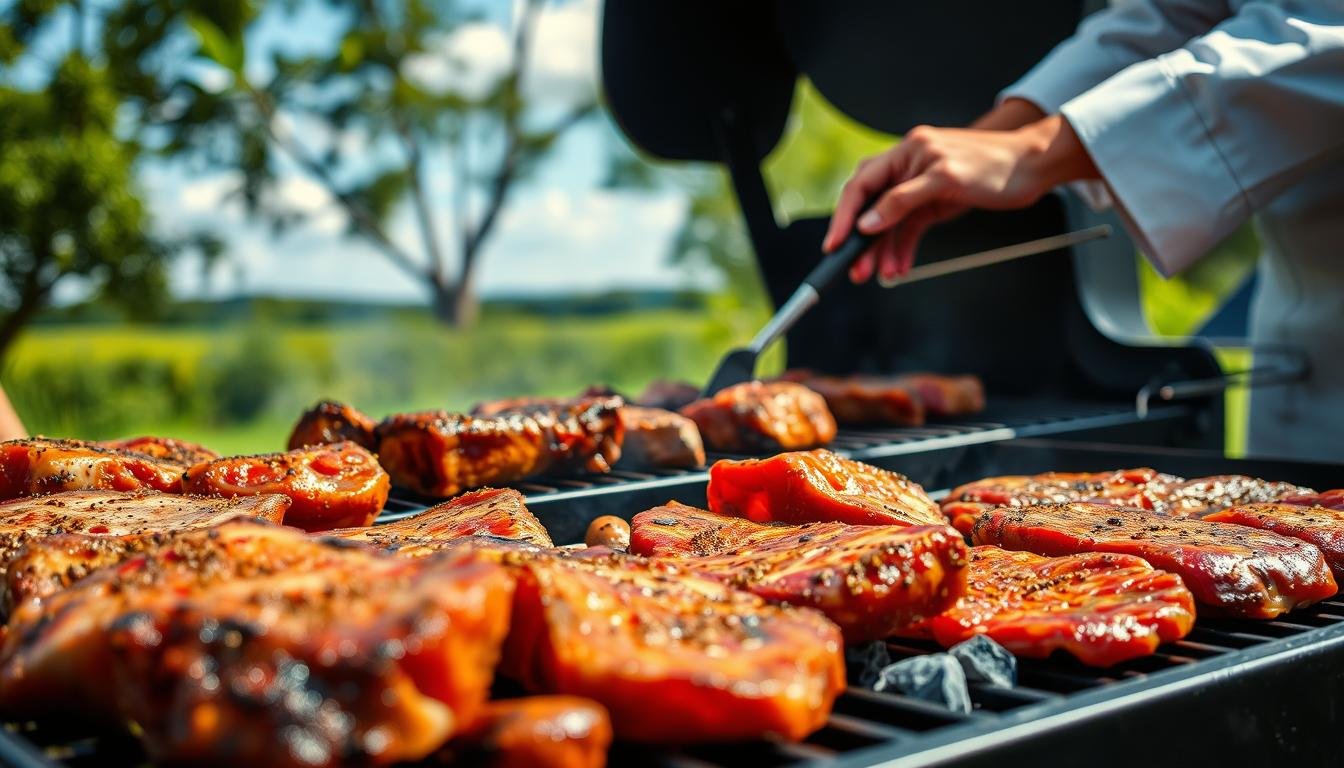
Use grilling for naturally tender meat that benefits from fast, high heat and short cooking time. Steaks and chops take a quick sear to form a crust while keeping a juicy interior.
Chicken breasts and seafood also do well here if you watch temperature and avoid overcooking. Short checks with an instant-read help you stop at the right doneness.
Tough cuts for barbecue: brisket, pork shoulder, ribs
Reserve long, low cooks for connective-tissue-rich cuts. Brisket, pork shoulder, and ribs need hours of indirect heat so collagen becomes tender gelatin.
Plan your schedule: an all-day cook gives deep flavor and pull-apart texture that quick methods can’t match.
- Pick grilling when you want a clean, charred crust and a meat-forward taste.
- Pick barbecue for deep smoke character and fork-tender results from slow cooking.
- Place food over the heat for sears and away from it for low-and-slow.
| Cut type | Best method | Why |
|---|---|---|
| Steaks / chops | Grilling | Quick sear, juicy interior |
| Brisket / pork shoulder / ribs | Barbecue | Long indirect heat breaks down collagen |
| Chicken breasts / seafood | Grilling | Short cooks protect moisture and flavor |
Thermometers and control: tools that keep temps in the sweet spot
A fast-read probe and a steady pit alarm play very different, but complementary, roles.
Use the right tool for the job so you stop guessing and start hitting targets.
Instant-read for speed on the grill
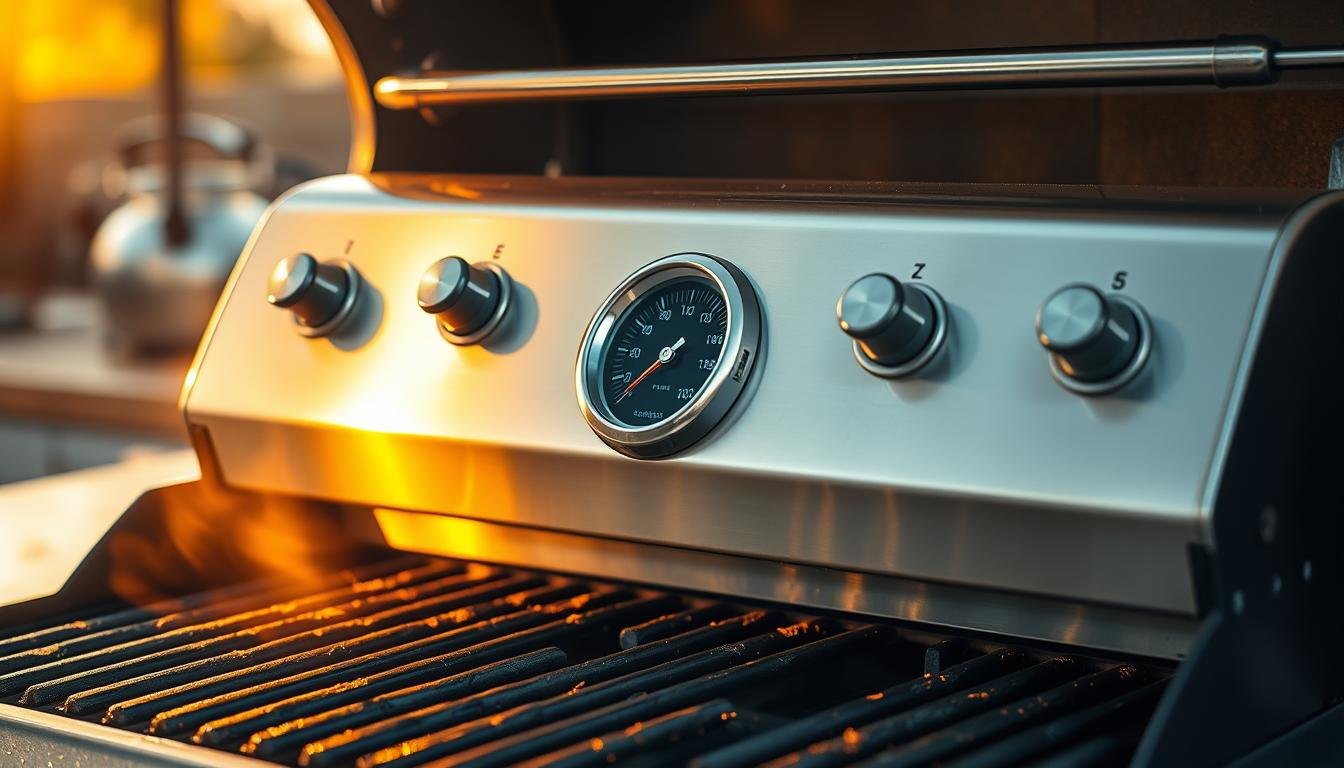
When you work over high heat, use a true instant-read like the Thermapen ONE.
It gives near-instant readings so you can check doneness without losing heat or moisture.
Leave-in probe alarms for long bbq cooks
For long cooks use leave-in probes and alarms such as Signals, Smoke X, or Smoke.
They watch both internal meat and pit temperature and alert you to drift.
For lab-grade accuracy, ThermaQ 2 uses Type-K thermocouples.
Airflow and fans: managing coals, vents, and controllers
Keep your cooker steady by adjusting vents on charcoal units or adding a fan like Billows.
Set high and low pit alarms so fuel issues show up early.
Always avoid leaving fragile probes at grate-level flames; reserve them for lower temperatures.
| Tool | Best use | Key benefit |
|---|---|---|
| Instant-read (Thermapen) | Quick checks at the grill | Fast, accurate doneness |
| Leave-in alarms (Signals, Smoke X) | Long bbq and smoker sessions | Continuous meat + pit monitoring |
| ThermaQ 2 (Type-K) | Precision multi-channel work | Lab-grade accuracy |
| Billows fan | Charcoal airflow control | Automates steady combustion |
Conclusion
strong, You’ll leave with a clear sense of the practical difference between each cooking method. Match your method to the cut so meat cooks with the right heat and finish.
Plan temperature and tools before you start. Use a fast instant-read on the grill for quick checks and a reliable leave-in probe during long cooks. This keeps temperature and time predictable and repeatable.
Wood and measured smoke are seasonings—add them like salt and spice. Keep it simple: set the plan, manage airflow, and let steady heat do the work.
You’ll also have one actionable tip today: set up a true two-zone fire so you always have a safe side to move food to when heat spikes. Share this at your next cookout and help people enjoy better results.
FAQ
How do direct heat and indirect heat change your cook?
What temperatures should you target for hot searing versus low-and-slow?
Which cuts work best for quick cooks and which need long cooks?
How does smoke type and amount affect flavor?
Can you use a gas grill for low-and-slow cooking?
How do charcoal and pellet setups differ in temperature control?
What tools should you rely on to hit target temperatures?
How long will common items take: steaks, chicken, ribs, brisket?
Is smoke always necessary for good flavor?
What tips help avoid flare-ups and burnt ends on a hot grate?
How do you choose wood for pork versus beef versus poultry?
What’s a reliable method for finishing a seared steak without overcooking?
Affiliate Disclosure: Some of the links in this post are affiliate links. This means I may receive a small commission if you purchase through my links, helping me keep this site running — at no additional cost to you.