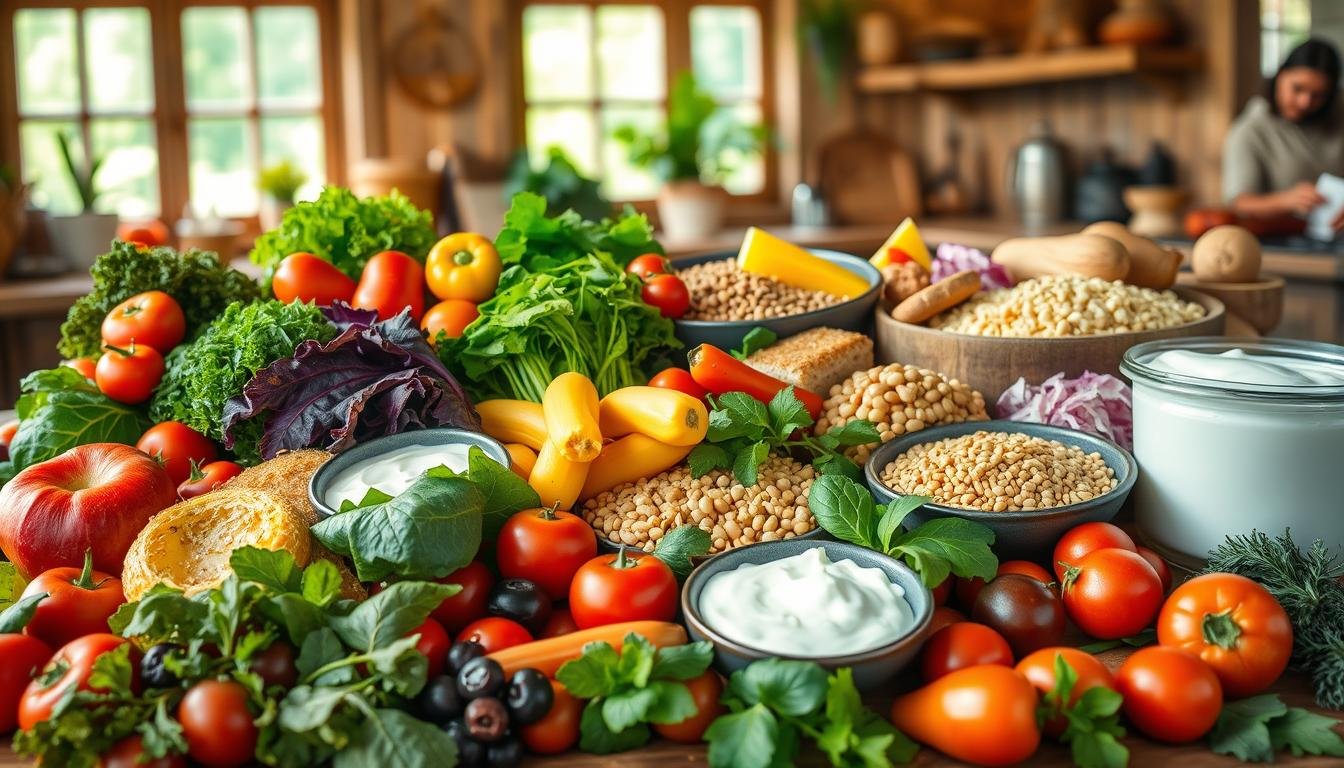
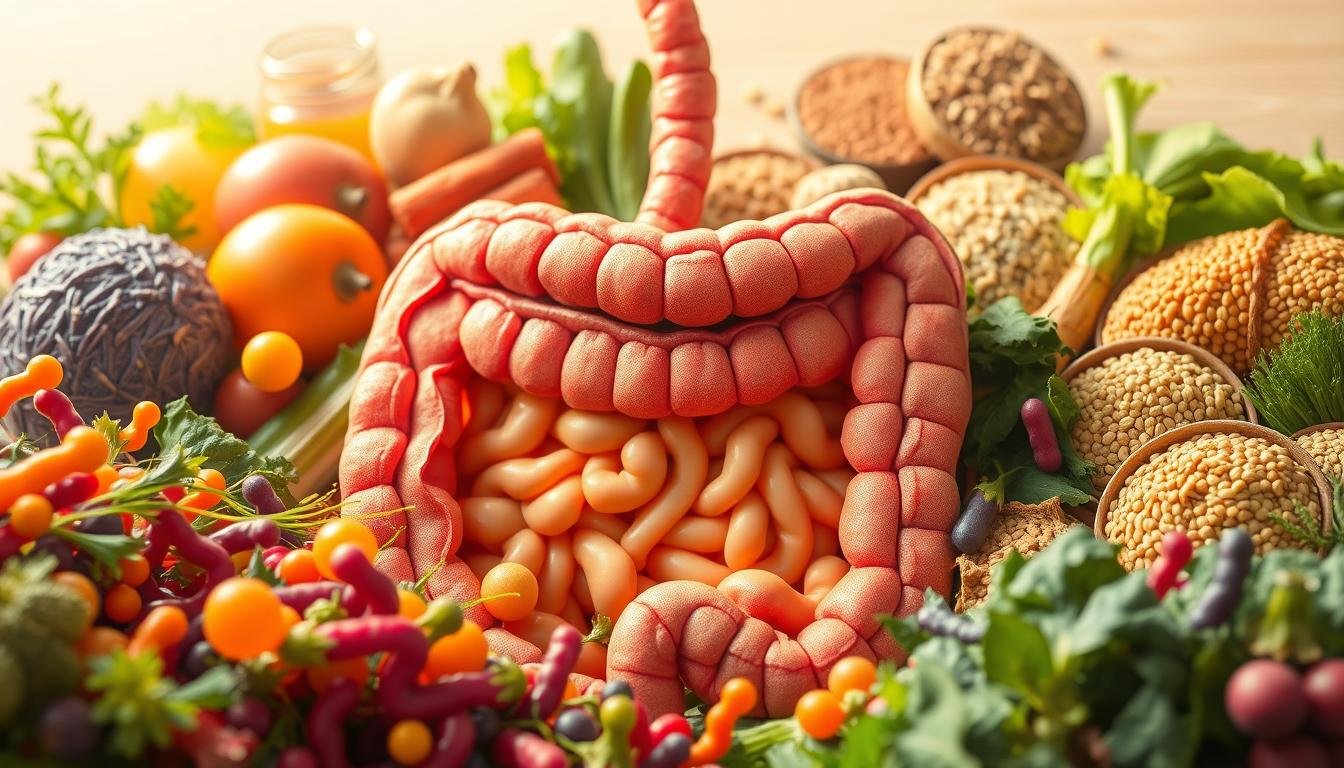

You can create simple, nourishing days that support your microbiome without complicated recipes. This introduction shows a component-based system for quick assembly of balanced meals that boost digestion, mood, and cardiometabolic markers.
Focus on fiber-rich plants, fermented foods, and whole grains. These elements feed beneficial bacteria and add diversity linked with healthier weight and better sleep via serotonin pathways.
Expect practical tips for shopping by section, batch prep, and no-recipe plate templates for breakfast, lunch, dinner, and snacks. Small daily add-ins like yogurt, kefir, kimchi, or sauerkraut can reinforce microbial variety.
The approach pairs Mediterranean-style patterns with time-saving methods and budget swaps. You’ll learn which foods to prioritize—beans, whole grains, fruits, vegetables, nuts, seeds—and which to limit, such as ultra-processed items and excess added sugars.
Key Takeaways
- Use a component system to build quick, balanced meals that support your gut health.
- Include fiber, prebiotics, and fermented foods to nourish the microbiome.
- Follow Mediterranean-style choices for lasting benefits to digestion and heart markers.
- Adopt simple batch-prep and one-pot methods to save time.
- Prioritize whole foods like beans, fruits, and whole grains; limit ultra-processed foods.
Why Gut Health Matters for Your Overall Well-Being
Your daily food choices shape the trillions of microbes in your gut and affect many parts of your health.
A 2022 review links a diverse microbiome with better heart markers, lower colon cancer risk, and improved sleep and mood through gut-derived serotonin. With about 70–80% of immune cells residing in the gut, supporting this ecosystem helps modulate inflammatory responses and strengthen the immune system.
Signs of imbalance can be obvious. Dysbiosis—low diversity and fewer helpful microbes—may show up as bloating, irregularity, fatigue, brain fog, skin issues, or mood shifts.
- You influence your health daily: microbes help regulate digestion, metabolism, inflammation, and immunity.
- Quick wins: the microbiome responds fast to dietary changes, so simple shifts in diet can improve how you feel in days or weeks.
- What helps: fiber, prebiotics, and fermented foods feed beneficial bacteria and crowd out patterns linked with inflammation.
- What hurts: a Western pattern high in refined sugars and ultra-processed foods can disrupt the microbiome and increase gut permeability.
Small, consistent changes—paired with sleep, stress management, and movement—give many people meaningful health gains over time.
Understand the Gut Microbiome Basics
Feeling foggy, stuck, or emotionally off?
- • Trouble focusing or feeling scattered
- • Low energy or emotional drive
- • Feeling disconnected or stuck
These tools can help you reset, refocus, and reconnect:
- 🔋 Mitolyn
- Cellular energy & mitochondrial support
- 🌙 SleepLean
- Restful sleep & metabolic balance
- 💧 ProstaVive
- Prostate comfort & urinary support
Think of the microbes in your digestive system as an ecosystem that thrives on variety and steady care.
How diverse bacteria support digestion, mood, and immunity
Your gut microbiome helps keep the mucosal barrier strong, makes key nutrients, and defends against pathogens.
Greater diversity of bacteria usually means smoother digestion, steadier energy, and more resilient immune responses.
Quick wins: why your microbiome responds rapidly to diet shifts
Your microbial community can shift in days when you change foods. Additions like whole grains and fermented dairy often produce noticeable effects fast.
“Small, consistent swaps compound over time—aim for variety rather than perfection.”
Fiber, prebiotics, probiotics: what each does for your gut
- Fiber fuels microbes and fuels short-chain fatty acids that nourish the gut lining.
- Prebiotics (inulin, resistant starch, polyphenols) feed helpful strains; find them in oats, bananas, artichokes, and legumes.
- Probiotics in yogurt, kefir, kimchi, and sauerkraut can boost beneficial bacteria numbers.
Tip: Rotate plant foods and include small amounts of fermented items several times a week to support gut health.
Set Your No-Recipe Meal Plan Framework
Use a modular approach so assembling quick, nourishing meals becomes routine. Pick a few base components and mix them across breakfasts, lunches, dinners, and snacks. This lowers decision fatigue and keeps variety high.
Use components, not recipes: assemble, combine, and go
Choose one cooked grain, one legume, a protein, 2–3 vegetables, a fruit, and a fermented add-in.
Assemble these pieces into bowls, toasts, or plates in minutes. Small swaps keep meals interesting without extra work.
Core weekly rhythm: breakfasts, lunches, dinners, and snacks
Repeat 2–3 breakfast templates, rotate two lunch bowls, and keep three dinner combos. Pre-portion snacks so choices are quick and consistent.
Build a leftover flow so tonight’s dinner becomes tomorrow’s lunch with almost no extra prep.
Aim for daily fiber targets without tracking every gram
Include a fiber source at each eating occasion rather than counting every gram. Aim for roughly 25–38 g per day depending on needs.
Use the 50% vegetables plate rule, and pair oats or muesli with yogurt or kefir for a fiber-forward breakfast.
| Component | Examples | Quick swap idea | Fiber boost |
|---|---|---|---|
| Grain | Oats, quinoa, barley | Swap rice for barley | +3–5 g per serving |
| Legume | Beans, lentils, chickpeas | Add to salads or bowls | +6–9 g per serving |
| Fermented | Kefir, yogurt, kimchi | Spoon on the side | Variety for microbiome |
Prep once on Sunday: a pot of grains, roasted vegetables, cooked beans, and a simple vinaigrette. Adjust portions each day for activity without changing your components.
Choose Foods That Feed a Healthy Microbiome
Select items that reliably supply fiber, prebiotics, and polyphenols for steady gut support. These choices are easy to stash, prepare, and rotate weekly.
High-fiber all-stars
Anchor meals with beans, lentils, oats, barley, and quinoa. These fiber-dense options feed beneficial bacteria and help regularity.
Produce power
Pick fruits and vegetables that act as prebiotics: onions, garlic, asparagus, artichokes, bananas, berries, tomatoes, and leafy greens. Rotate types each week for wider microbial exposure.
Healthy fats and polyphenols
Include olive oil, avocado, walnuts, and fatty fish for omega-3s and polyphenols. Small amounts of dark chocolate, tea, and berries add antioxidant benefits.
Protein that pairs with fiber
Choose fish, chicken, eggs, tofu, tempeh, or lentils and serve them with whole grains and vegetables. Pairing protein with fiber slows digestion and improves satiety.
| Category | Examples | Why it helps | Quick tip |
|---|---|---|---|
| Grains | Barley, quinoa, oats | Resistant starch and diverse fiber | Cook and cool some for resistant starch |
| Legumes | Beans, lentils, chickpeas | High fiber, feed bacteria | Add to salads and bowls |
| Nuts & Seeds | Walnuts, chia, flax | Omega-3s and polyphenols | Sprinkle on yogurt or oats |
| Produce & Ferments | Garlic, artichoke, kimchi, kefir | Prebiotics and probiotic variety | Include a small fermented side daily |
“Small swaps—whole grains, more beans, a daily fermented spoon—compound into better gut function.”
Tip: Build plates that start with plants, then add protein and healthy fats for balanced nutrition and lasting energy.
Spot the Foods to Limit for Better Gut Health
Certain everyday items in your pantry can quietly undermine your microbiome and overall wellbeing. Spotting them helps you keep the gut ecosystem resilient and your meals more nourishing.
Ultra-processed items, refined sugars, poor-quality fats
Western-style patterns high in refined sugars and ultra-processed snacks are linked with lower microbial diversity and greater gut permeability.
Avoid long ingredient lists filled with emulsifiers and stabilizers when possible. Swap trans-rich spreads and partially hydrogenated oils for extra-virgin olive oil and omega-3 sources.
When sodium and artificial sweeteners can work against you
Excess sodium in canned soups, deli cuts, and frozen meals can stress your system. Artificial sweeteners may disrupt some people’s bacteria and cause digestive issues.
- Limit ultra-processed products that list many additives and stabilizers.
- Keep refined sugars and sweet drinks in check; they shift microbial balance.
- Replace poor-quality fat with olive oil, nuts, and oily fish.
- Watch sodium on labels and choose lower-sodium options when available.
- Be cautious with artificial sweeteners if you notice bloating or discomfort.
Small reductions in ultra-processed intake make space for more fiber-rich foods and better long-term health.
Align Your Plan with a Mediterranean-Style Pattern
Let Mediterranean patterns guide your week: mostly plants, olive oil, whole grains, and limited sweets and red meat.
This diet emphasizes fruits, vegetables, nuts, seeds, legumes, fish, and minimally processed dairy like yogurt or kefir. It naturally raises fiber and polyphenols, which support beneficial shifts in the microbiome and a healthy gut.
Build plates by starting with vegetables and fruit, then add beans or whole grains, and finish with fish, poultry, eggs, or plant protein. Use olive oil, nuts, and seeds for healthy fats and flavor with herbs, spices, citrus, or vinegar instead of excess salt.
- Limit red meat and sweets; favor seasonal produce for variety.
- Include fermented dairy several times a week for probiotic benefit.
- Pair the pattern with simple batch prep for busy days.
“Small, consistent shifts toward plant-forward eating support steady improvements in digestion and overall health.”
| Feature | What it favors | Why it helps |
|---|---|---|
| Primary fat | Extra-virgin olive oil | Provides polyphenols and healthy fats for inflammation control |
| Staples | Legumes, whole grains, vegetables | Boost fiber and feed diverse microbes |
| Protein | Fish, poultry, eggs, plant proteins | Balanced energy and nutrients with less red meat |
Build Your Plate Templates for Easy, No-Recipe Meals
A small set of reliable plate templates helps you meet fiber goals and eating variety without recipes. Use these simple patterns so assembling breakfast, lunch, dinner, and snacks becomes fast and repeatable.
Breakfast templates
Overnight oats or muesli with yogurt or kefir, berries or banana, and chia or flax give a fiber-and-probiotic boost.
Alternate savory: eggs, leafy greens, and leftover roasted vegetables for an early fiber win.
Lunch templates
Build bowls with legumes, quinoa or another whole grain, crunchy vegetables, and an olive oil-lemon dressing. Top with a spoonful of fermented food for variety.
Dinner templates
Pair lean protein like fish or chicken with roasted vegetables and a grain. Add herbs, lemon zest, and a small side of sauerkraut or kimchi.
Snack templates
- Fresh fruit plus almonds.
- Small kefir or yogurt cup.
- Energy bites made from oats, nut butter, and seeds.
“Repeat two or three favorite templates each week to save time and keep variety high.”
Quick tip: Use a daily color checklist and pre-portion add-ons so most meals take under five minutes to assemble. Small routines like this support a resilient gut and steady eating habits.
Add Fermented and Functional Foods the Simple Way
A daily spoonful of fermented sides and a serving of prebiotic-rich produce make microbiome-friendly eating practical. These small choices boost beneficial microbes and support digestion without complicated steps.
Probiotic boosts
Probiotic foods such as yogurt, kefir, kimchi, sauerkraut, and low-sugar kombucha add live cultures that increase helpful bacteria. Start with a small cup or a few forkfuls and rotate types across the week.
Prebiotic boosters
Prebiotics feed those cultures. Onions, garlic, asparagus, oats, bananas, barley, and beans provide inulin and resistant starch that help produce short-chain fatty acids.
- Add one small serving of a fermented choice daily: a cup of yogurt or kefir, a few forkfuls of kimchi or sauerkraut, or a bottle of low-sugar kombucha.
- Combine probiotics with prebiotics for a synbiotic effect—yogurt topped with oats and banana or kimchi folded into a bean bowl.
- Start small if you are new to fermented foods and increase portions as tolerated. Watch labels for live cultures and low added sugar.
“Rotate fermented sides and use prebiotic vegetables in regular meals for steady, subtle improvements in digestion and regularity.”
Stock Your Kitchen and Shop by Sections
Stocking shelves with purposeful staples makes assembling nourishing plates all week much easier.
Produce picks
In produce, prioritize leafy greens, crucifers, berries, onions, garlic, and sweet potato for fiber and prebiotics.
These foods add color, texture, and nutrients that help digestion and satiety.
Center‑aisle essentials
From center aisles, choose oats, quinoa, barley, brown rice, lentils, canned beans, almonds, walnuts, chia, and flax.
Keep some whole grains and versatile grains for quick bowls and snacks.
Perimeter and smart swaps
On the perimeter, grab yogurt, kefir, cottage cheese, eggs, poultry, and fish. Verify live cultures on fermented dairy labels.
Pick low‑sodium cans or rinse beans to cut salt. Frozen fruit and vegetables save money and time.
“A short pantry checklist keeps staples on hand and cuts midweek decision fatigue.”
Tip: Keep clear containers and a weekly restock habit so these components support your gut and overall health.
Batch-Prep Once, Eat All Week
A single 60–90 minute prep block saves you constant decision-making and creates ready components for the entire week.
Cook big basics that form the backbone of quick meals: a pot of quinoa or barley, a simmered pot of lentils, and one sheet pan of roasted vegetables. Portion these into clear, airtight containers so you can see what you have at a glance.
Ready proteins and staples
Keep ready‑to‑eat proteins like rotisserie chicken, baked chicken breasts, or pre-cooked lentils on hand for fast lunches and dinners. These save you time and pair well with warm grains and veggies.
Grab-and-go add‑ons
Make overnight oats for several breakfasts, roll a batch of energy balls, and shake up a jar of vinaigrette. Small jars of herbs, citrus, and chopped nuts brighten leftovers without reheating.
- Portion grains and legumes into single‑serve containers for easy mixing.
- Roast sturdy vegetables—carrots, broccoli, sweet potato—that reheat well across days.
- Freeze extra cooked grains and beans flat for emergency meals.
- Keep a rotating list of bowl combinations so your meals stay varied and satisfying.
“Prep once and assemble in minutes — it’s the simplest way to support a balanced gut and steady eating all week.”
Sample Seven-Day No-Recipe Gut Health Plan Skeleton
Start your week with a simple skeleton that keeps fiber and fermented choices front and center. Use the pattern below as a flexible guide: swap grains, beans, and vegetables while keeping structure consistent.
Each day combines a filling breakfast, a grain‑or‑legume lunch, a protein-forward dinner, and a small snack with fermented or probiotic touches like yogurt or kefir.
- Day 1: oats + yogurt + berries; lentil‑quinoa bowl; salmon, roasted crucifers, sweet potato; fruit + nuts.
- Day 2: kefir muesli; chickpeas + barley salad; chicken + roasted roots + sauerkraut; energy ball.
- Day 3: overnight oats with banana; leftover chicken salad; tofu stir‑fry + brown rice; kefir snack.
- Day 4–7: follow similar swaps—eggs, muesli, chia parfaits; mixed bean salads; fish, shrimp, turkey or rotisserie chicken; small fermented sides.
Notes: Typical daily totals hover near 1,800 kcal with ~30–50 g fiber. Adjust portions for your protein needs and keep sodium moderate by choosing low‑salt cans and seasoning with herbs and citrus.
“Use this skeleton to mix components freely while keeping fiber-forward meals all week.”
| Focus | Example | Why it helps |
|---|---|---|
| Breakfast | Oats, kefir, fruit | Fiber + probiotics for morning digestion |
| Lunch | Grain + legume bowl | Steady energy and sustained fiber |
| Dinner | Protein + veg + whole grain | Balanced nutrients and satiety |
Personalize by Calories, Protein, and Fiber
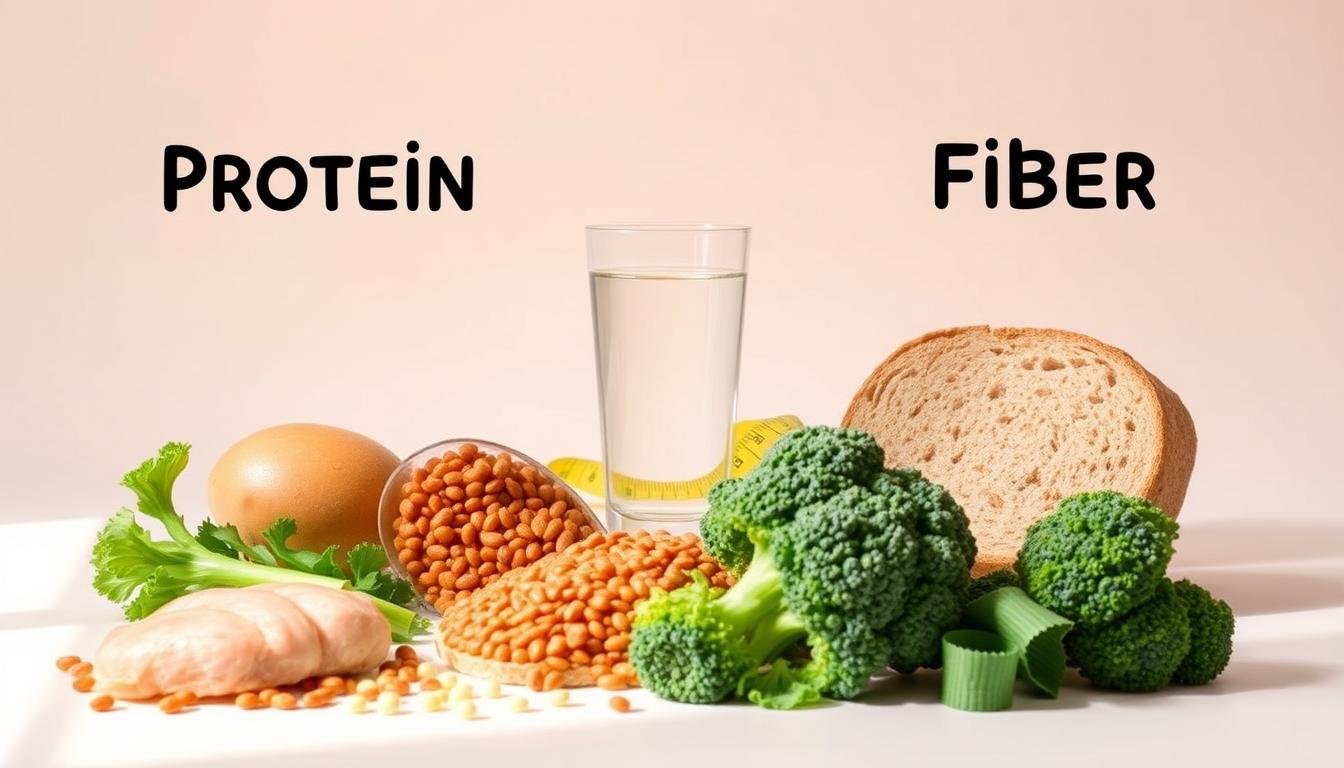
Adjusting grain, legume, and fat servings lets the same templates work across calorie ranges. You can shift portions to reach about 1,500 or 2,000 calories without redesigning meals. Use the 14 g per 1,000 calorie rule to set a practical fiber target that matches your goals.
Adjust portions for 1,500–2,000 kcal
Change serving sizes of grains, beans, and nuts to lower or raise calories. Add an extra cup of whole grain or an ounce of nuts on higher‑need days. Avoid dropping below 1,200 kcal; it is too low for most adults.
Keep protein steady; raise fiber
Keep a consistent protein portion each meal for satiety and muscle support. Increase fiber by adding fruit, an extra vegetable, or another legume serving rather than supplements.
Match energy to activity
On active days, increase whole grains, legumes, and fruit. On sedentary days, favor vegetables and lean protein and trim high‑fat portions. Watch sodium: pick low‑sodium cans, rinse beans, and use herbs and citrus for flavor.
- Use healthy fats like olive oil, nuts, and seeds to raise calories without sacrificing nutrients.
- Track weekly, not hourly, and revisit portions monthly.
- Consider a registered dietitian if you have specific health needs or want tailored meal plans.
“Small tweaks in portions and simple swaps deliver balanced nutrition and steady progress.”
How to Build a Gut Health Meal Plan Without Recipes in Real Life
A handful of default builds keeps you fed and steady on busy weekdays. Use prepped grains, beans, roasted vegetables, and a fermented spoon for fast balance. This saves time and brings consistent energy across the day.
Five-minute assemblies for busy weekdays
Assemble a five-minute plate from fridge parts: grain + bean + veg + olive oil + fermented topper. That quick combo makes a balanced meal with minimal effort.
Turn store-bought cooked chicken into a fast salad. Toss greens, quinoa, chopped veggies, and a spoon of sauerkraut or kimchi. You get protein and probiotic variety in one bowl.
Using leftovers to feed the next meal
Repurpose last night’s roasted vegetables and chicken into a warm bowl with barley and yogurt-dill sauce. Overnight oats with kefir, chia, and fruit give grab-and-go breakfasts for busy mornings.
- Fast add-ins: nuts, seeds, olives, pickled onions for crunch and fiber.
- Sauté frozen veg, fold in pre-cooked lentils, finish with lemon for an instant dinner.
- Pack tomorrow’s lunch while you clean up tonight—bento-style saves prep time.
“Keep two or three default builds on a note in your kitchen to cut decision fatigue.”
Time-Saving Strategies for Busy Weeks
Short prep blocks and smart appliance use free up minutes so you can eat well even during hectic weeks. A little planning each weekend and a midweek top-up keep your fridge ready for fast, fiber-forward meals that support your gut.
Sheet-pans, one-pots, and mix‑and‑match bowls
Choose simple formats that make cleanup fast and assembly easier. Sheet-pan dinners—think chickpeas, broccoli, onions, and sweet potato—roast together for a high-fiber, one-pan meal you can portion for multiple nights.
One-pot soups and stews with beans, lentils, and mixed vegetables create several dinners with minimal washing. Cook double batches of grains and legumes, then use them in mix-and-match bowls across the week.
- Standardize a weekly prep session and a short midweek top-up to keep produce fresh.
- Use pressure cookers for dried beans and grains, and air fryers for quick, crispy vegetables.
- Pre-chop hardy vegetables and keep “assembly kits” (grains, protein, chopped veg, sauce) in clear containers for under-10-minute dinners.
- Repeat two or three favorite templates so planning time falls sharply while you still hit fiber and fermented add-ins.
- Keep low-prep flavor boosters—herbs, citrus, tahini, yogurt sauces—on hand to vary dishes with little effort.
“A small rotation and reliable appliances let you eat well with far less prep time.”
Gentle Options for Sensitive Digestion
If you notice gas, bloating, or irregularity, take gradual steps that respect your comfort. Small changes let your microbiome shift without causing more upset.
Start slowly: increase fiber a little at a time. Begin with cooked vegetables, oats, and plain rice before adding raw salads or dense legumes.
- Try teaspoon‑to‑tablespoon servings of yogurt or kefir first. Choose plain, low‑sugar options and raise portions as you tolerate them.
- Rinse canned beans and cook dried legumes well, and start with smaller servings to reduce gas.
- Opt for well‑cooked vegetables and remove peels initially. Build up to raw crucifers and garlic slowly.
- Keep sodium moderate to limit water retention and added strain on digestion.
- If symptoms persist, consider a short low‑FODMAP trial under guidance to pinpoint triggers.
Hydrate and move gently—walking aids regularity. Track which foods you tolerate and rotate them while you broaden plant choices.
If symptoms continue, consult a registered dietitian or clinician for tailored testing and support.
Budget-Friendly Swaps That Still Feed Your Microbiome
You can favor affordable staples and still get diverse nutrition that supports digestive resilience.
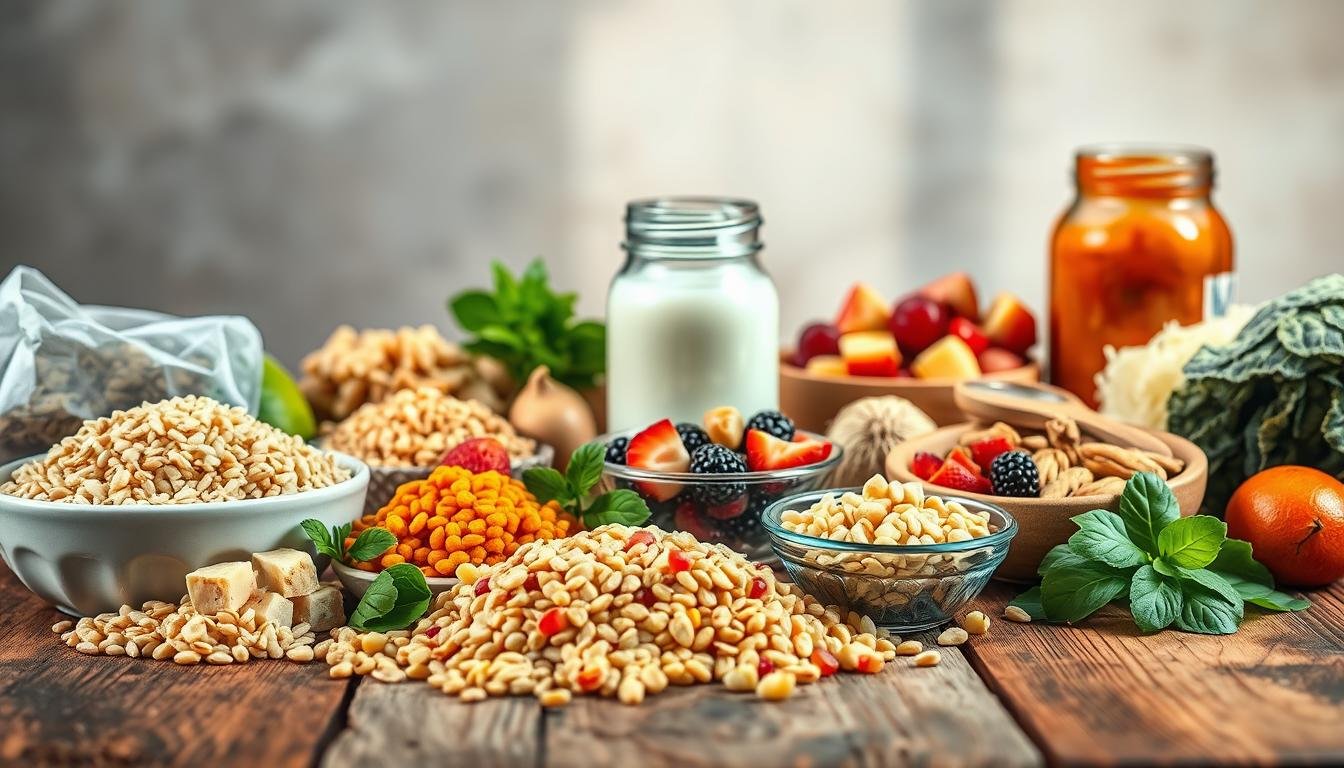
Buy frozen vegetables and berries for cost savings and steady vitamin content. They last longer and cut waste, so you can eat more plants each week.
Choose canned beans and lentils as inexpensive protein and fiber sources. Rinse them to reduce sodium and keep several varieties on hand for quick bowls.
Purchase oats, quinoa, and brown rice from bulk bins to lower unit cost. Stock staples like sweet potato, onions, and carrots for reliable fiber and prebiotic value.
Use chia seeds, flax, and peanut butter in overnight oats and energy bites for cheap, gut-friendly snacks. Buy plain yogurt in larger tubs and portion at home to save money.
Rotate almonds with lower-cost nuts or seeds—peanuts or sunflower seeds work well—so you keep healthy fats and variety without overspending.
| Buy | Why it helps | Quick use | Budget tip |
|---|---|---|---|
| Frozen veg & berries | Preserve nutrients; reduce spoilage | Stir into bowls, smoothies, soups | Buy store brand in bulk |
| Canned beans & lentils | High fiber and protein | Salads, stews, bowls | Rinse to cut sodium; buy varied types |
| Bulk grains (oats, quinoa) | Long shelf life; whole-grain fiber | Overnight oats, sides, pilafs | Measure and store in airtight jars |
| Staples (sweet potato, onions) | Affordable fiber and prebiotics | Roast, mash, or add to soups | Plan meals around sales |
“Reuse cooked components across meals, track pantry stock, and plan around store sales to stretch your dollars and your food choices.”
Conclusion
Wrap up with a flexible routine that makes fiber, prebiotics, and probiotics regular habits. A Mediterranean-style, fiber-forward approach and modest portion choices form a practical diet you can live with. This supports gut health and nudges the microbiome toward more helpful diversity.
Use simple rules: shop by sections, batch‑prep staples, and keep a handful of plate templates. That way your meal plan stays realistic, meal plans stay varied, and your meals come together quickly while keeping sodium moderate and processing low.
Small, steady shifts compound fast. With consistent choices you can support a healthy gut and enjoy a sustainable plan that fits your life—scale fiber slowly if digestion is sensitive and seek professional guidance when needed.
FAQ
What daily fiber target should you aim for to support your microbiome?
Which foods provide reliable prebiotics and probiotics?
Can you follow a gut-friendly weekly pattern without strict recipes?
How quickly does the microbiome respond to dietary changes?
What proteins pair best with fiber-rich foods for gut support?
Which foods should you limit for better gut health?
How can you meet fiber goals on a 1,500–2,000 calorie plan?
Are fermented foods safe if you have sensitive digestion?
What simple kitchen staples should you stock for no-recipe meals?
How can you keep costs down while feeding your microbiome?
Affiliate Disclosure: Some of the links in this post are affiliate links. This means I may receive a small commission if you purchase through my links, helping me keep this site running — at no additional cost to you.